
From manual configuration to guided automation.
Advantage+ Sales Campaign
Role: Product design lead
Timeline: ~6 months
Team: Cross-org V-team. Product Design (3), Content (2), Engineering (4), Product Management, Data Science
The shift toward AI-assisted advertising
Meta’s advertising ecosystem was rapidly evolving toward AI-driven campaign optimization. As automation capabilities expanded, campaign setup workflows became increasingly complex for advertisers to navigate. Advertisers needed clearer guidance to understand how to configure campaigns for stronger outcomes.
Unifying optimization and campaign creation
Campaign Score unified Opportunity Score and Advantage+ Shopping Campaigns into a single optimization framework within campaign creation flows. Advertisers received prioritized recommendations and performance guidance directly during setup instead of navigating fragmented optimization systems.
Unifying optimization and campaign creation
The experience helped transition campaign creation from manual configuration toward AI-assisted optimization systems. The design balanced automation with advertiser control, recommendation clarity, and performance transparency.
Impact snapshot
Advertisers
10M+
Launch scope
Global
Testing sessions
26
Issues resolved
680+
Liquidity
+1%
Context
In 2026, Meta became positioned for the first time to pass Google in digital ad revenue, with over 10 million advertisers using Ads Manager to publish ads to almost 4 billion monthly active users. Just two years prior, publishing an ad campaign in Ads Manager was a very different experience, with tools that were growing in scale and sophistication, but also in complexity.
This project unified two previously separate campaign creation workflows into a single, cohesive experience. The combination of Advantage+ Sales Campaign under the umbrella of Opportunity Score became the first proactive framework that guided advertisers toward higher-performing campaign configurations before publishing new campaigns.
Advantage+ Sales Campaign was a major shift in how advertisers create ad campaigns, moving from manually configuring independent levers toward increasingly intelligent guided setup, with a clear view into the most valuable opportunities. Leadership at Meta referred to it as one of the transformations of the advertiser experience in company history.
Key objectives
For advertisers
Simplicity
Simplify campaign creation
Help businesses confidently configure high-performing campaigns through guided recommendations tied to proven optimization strategies.
Improve decision confidence
Reduce guesswork by surfacing the most valuable optimization opportunities with clear prioritization and expected outcomes.
Increase trust in automation
Create a transparent system that helps advertisers understand when automation systems outperform manual setup approaches.
For Meta
Automation adoption
Increase automation adoption
Drive adoption of Advantage+ optimization products and AI-assisted advertising systems through a centralized recommendation framework.
Improve setup quality
Increase campaign optimality across the ad creation journey through guided configuration patterns and real-time opportunity insights.
Establish orchestration pattern
Create a scalable framework capable of coordinating optimization systems and recommendations across multiple campaign setup surfaces.
For me
System thinking
System-level transformation
Lead design of a foundational framework that redefined how advertisers interact with optimization systems.
Bridge the control vs. autonomy gap
Help advertisers transition from control-oriented workflows toward confidence-driven collaboration with automation systems.
Build scalable product systems
Create a flexible optimization framework capable of evolving alongside Meta’s rapidly expanding automation ecosystem.
Program details
Referred to as one of the largest advertiser experience shifts in company history by leadership.
My scope
I led design strategy for Campaign Score and the broader merging of Advantage+ Sales Campaigns and Opportunity Score inside campaign creation experiences.
My work included:
- campaign scoring and ranking framework strategy
- optimization and automation adoption patterns
- advertiser trust and explainability concepts
- branding, iconography, naming
- cross-functional design alignment
- research prototypes
I also led quality testing processes used across 26 launch-readiness sessions, helping identify and resolve hundreds of technical and usability issues before global rollout.
Design philosophy
One of the core challenges behind Campaign Score was balancing advertiser control with increasingly capable automation systems. As Meta’s AI systems matured, many manual configuration decisions became less valuable, and in some cases actively limited optimization potential.
Historically, advertisers associated more controls, more customization, and more manual setup with better performance. But increasingly, the opposite was becoming true. The challenge shifted from helping advertisers configure every detail manually toward helping them confidently collaborate with intelligent optimization systems.
Some of the most impactful design work came from reinforcing a new mental model:
that less manual configuration could produce better outcomes. Campaign Score was a confidence system as much as an optimization system.
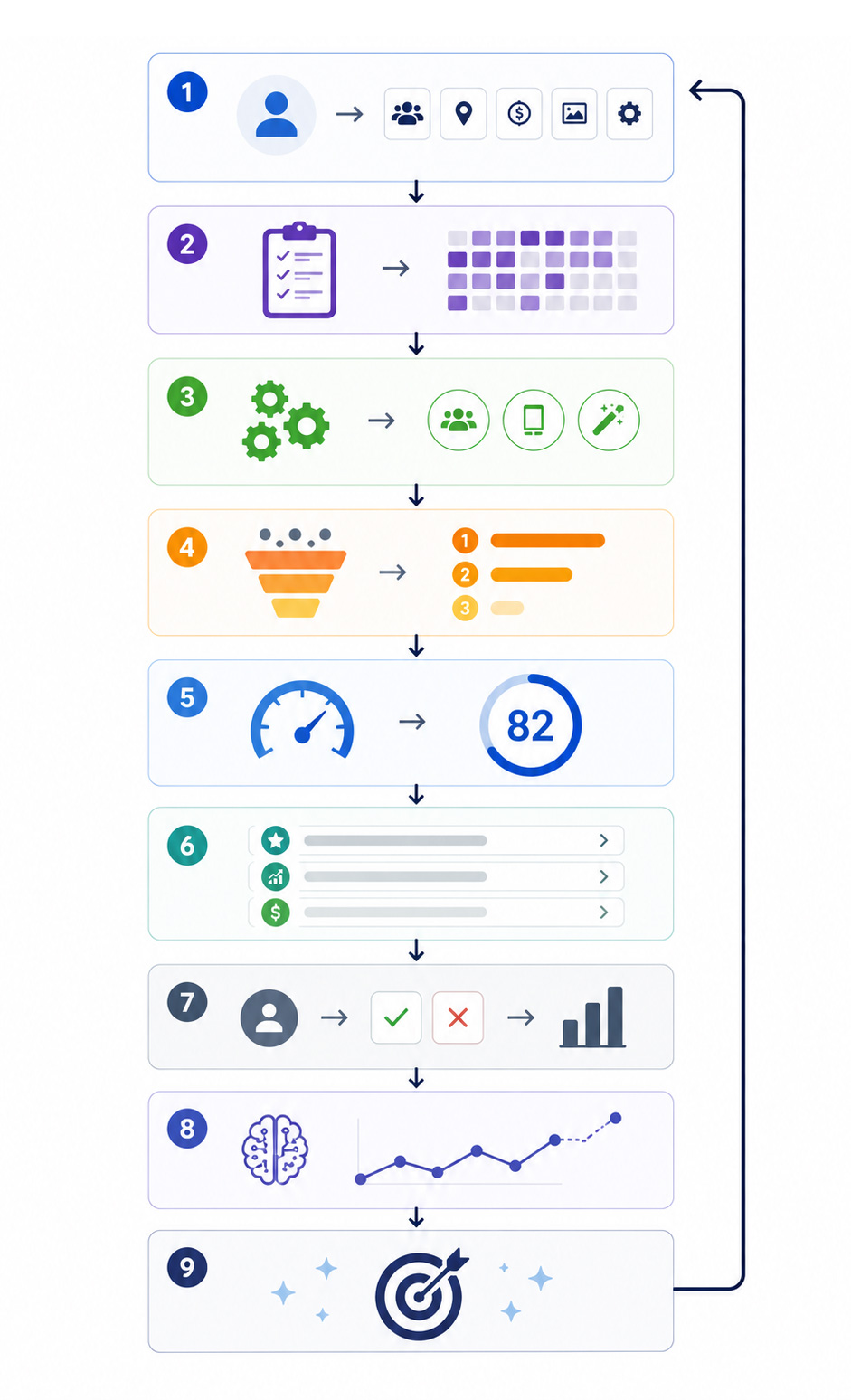
1
Advertiser inputs
Advertiser configures the campaign across audience, placements, budget, creative, and optimization settings.
2
Campaign state evaluation
The system evaluates setup quality across key dimensions and identifies gaps, risks, and optimization opportunities.
3
Recommendation engines
Specialized engines generate opportunities across audience, placements, creative, budget, bidding, and automation.
4
Ranking and prioritization
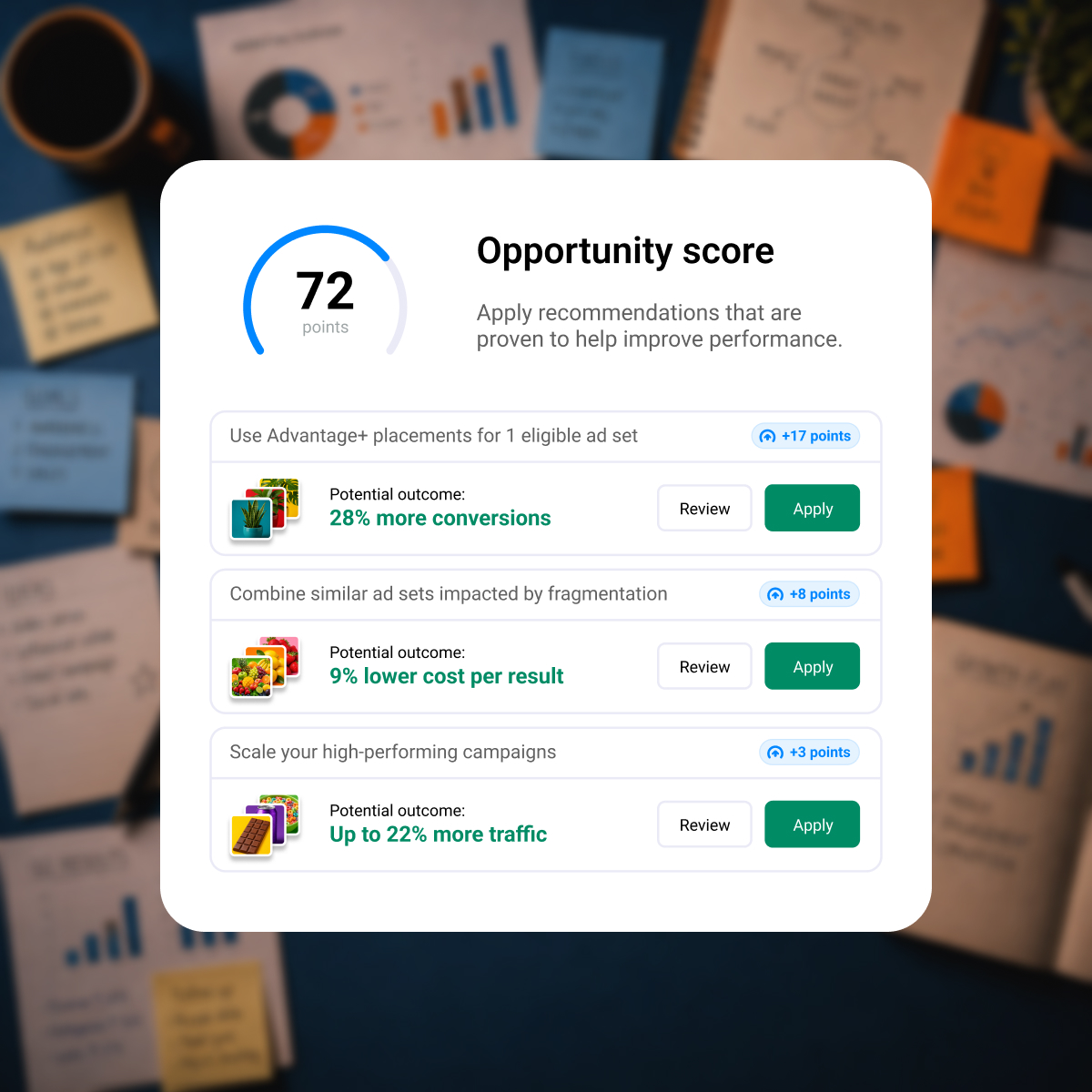
Opportunities are ranked by predicted impact, confidence, urgency, relevance, and advertiser effort.
5
Scoring
A unified score translates setup quality into a simple campaign optimization signal.
6
Guided actions
Advertiser receives prioritized recommendations with clear next-best actions.
7
Advertiser responses and outcomes
The system tracks whether recommendations are accepted, dismissed, or ignored, and connects actions to performance outcomes.
8
Learning system
Models learn from advertiser behavior and campaign results to improve future prediction and prioritization.
9
Continuous feedback loop
The system continuously improves, turning campaign setup into an adaptive feedback loop between advertiser intent, AI guidance, and performance outcomes.
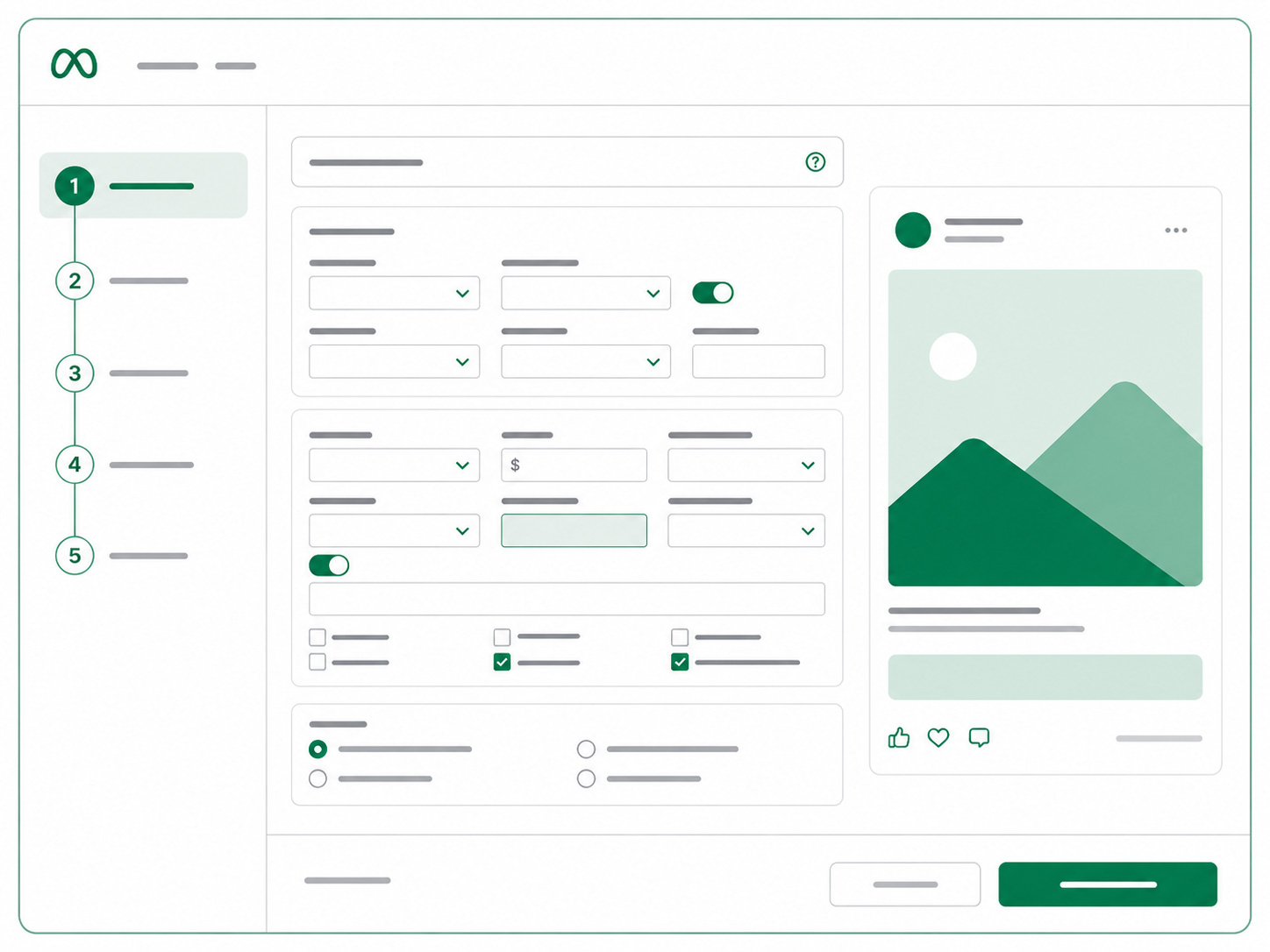
Complex manual ad configuration flows
The problem
As Meta’s advertising ecosystem evolved, tools increased in sophistication, and campaign setup became more complex, navigating targeting, placements, budgets, creative optimization, and automation decisions across Ads Manager.
At the same time, Meta’s Advantage+ products introduced increasingly sophisticated AI-optimized solutions, but advertisers often lacked clarity around when automation would outperform manual configuration, or which setup decisions mattered most.
As complexity scaled, advertisers faced more optimization capabilities, but less clarity about how to use them effectively.
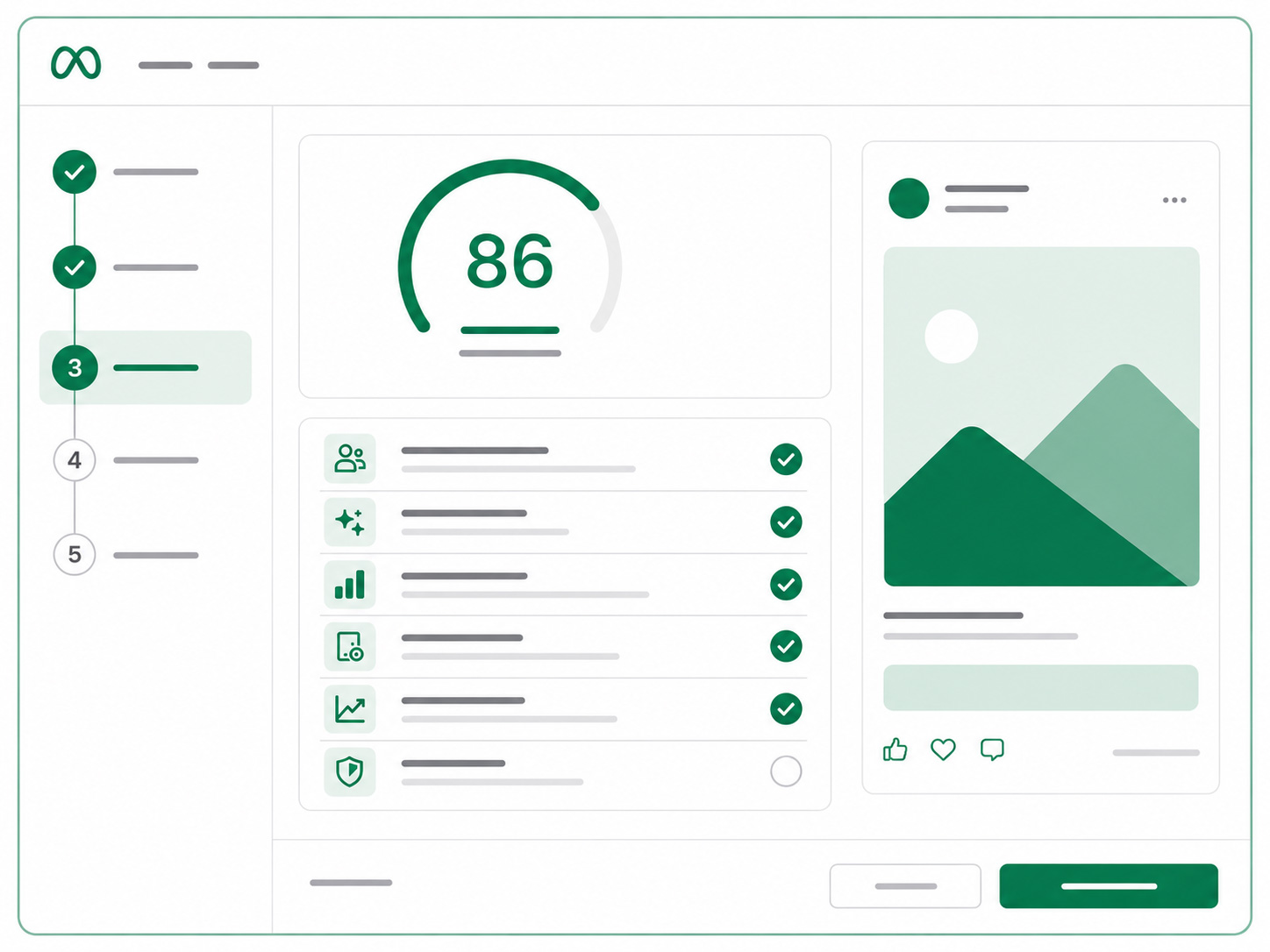
Automation-first ad creation framework
The solution
Unifiy Advantage+ Sales Campaigns and Opportunity Score under the umbrella of a Campaign Score as a centralized optimization and guidance framework, directly into the campaign setup experience.
The system surfaces prioritized recommendations to improve campaign quality tied to proven best practices. Rather than manually interpret increasingly complex systems, Campaign Score simplified ad setup through prioritized opportunities with predicted performance impact.
This helps advertisers build confidence in automation systems, while simplifying campaign creation tasks.
Design strategy
Reducing cognitive workload
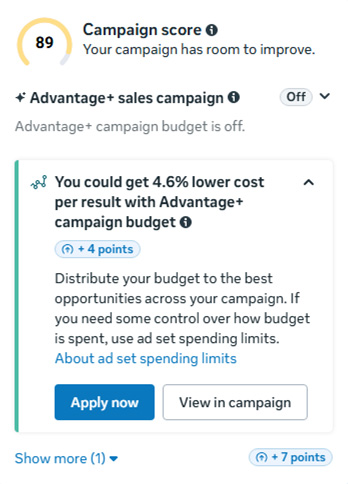
Campaign Score prioritized the most valuable opportunities instead of surfacing every recommendation, warning, error, or insight equally. Recommendations were ranked by:
- predicted impact
- urgency
- relevance
- confidence
This transformed guidance from noisy alerts into focused next-best actions, all in the context of metrics that advertisers actually care about.
Building trust in automation
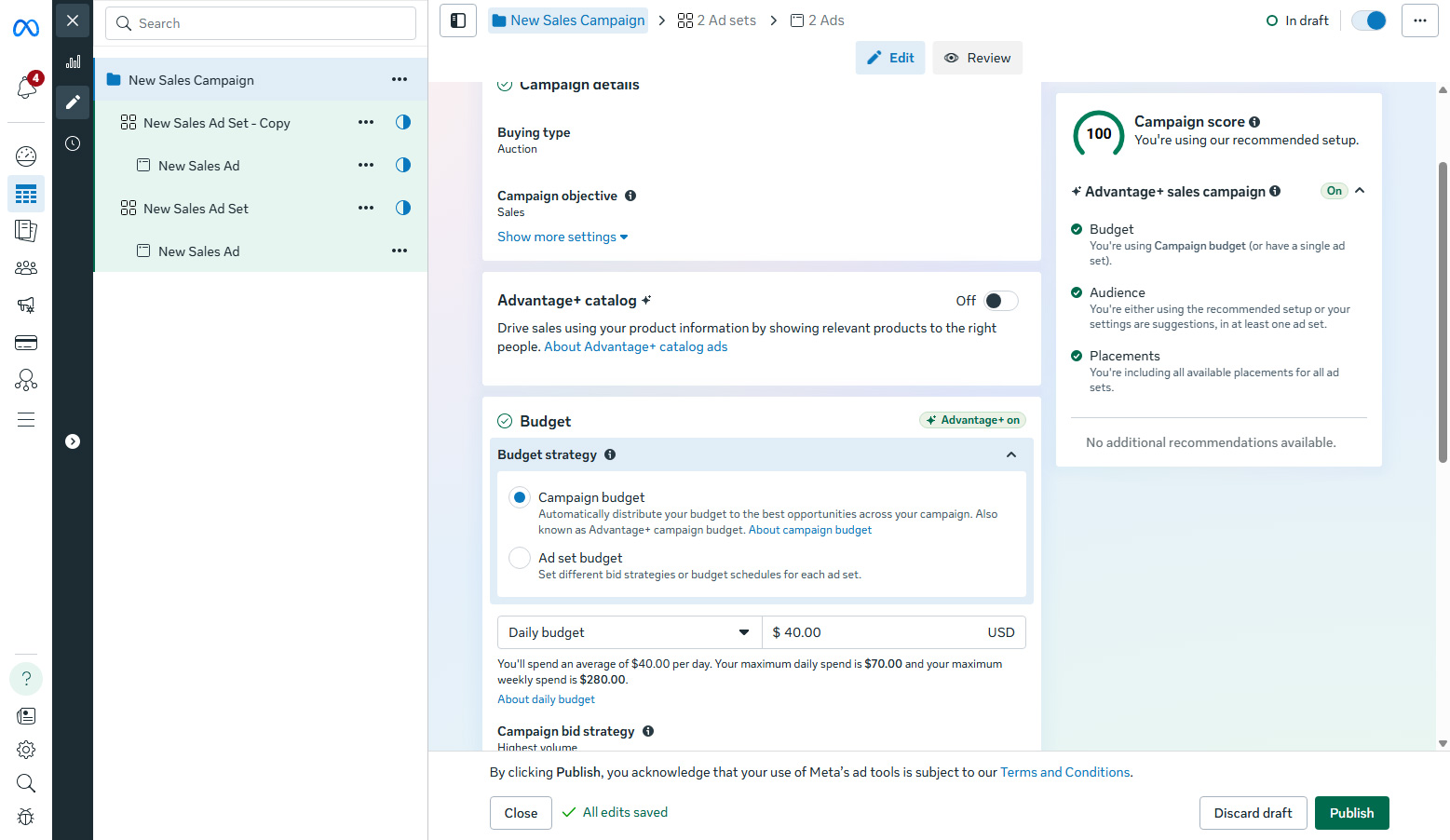
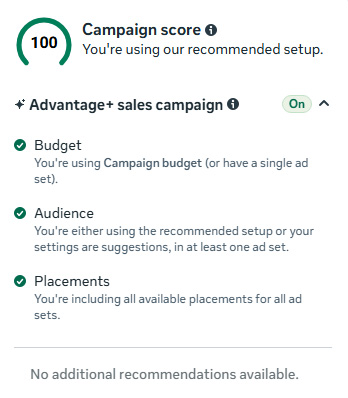
Automation systems become difficult to trust when users can’t understand the basis for recommendations. Advertisers needed to understand:
- why recommendations appeared
- what outcomes they could improve
- when automation should be trusted
- how business constraints would be respected
Campaign Score connected recommendations to expected business results, helping advertisers make decisions with greater confidence while keeping the experience simple and understandable.
The core advertiser experience
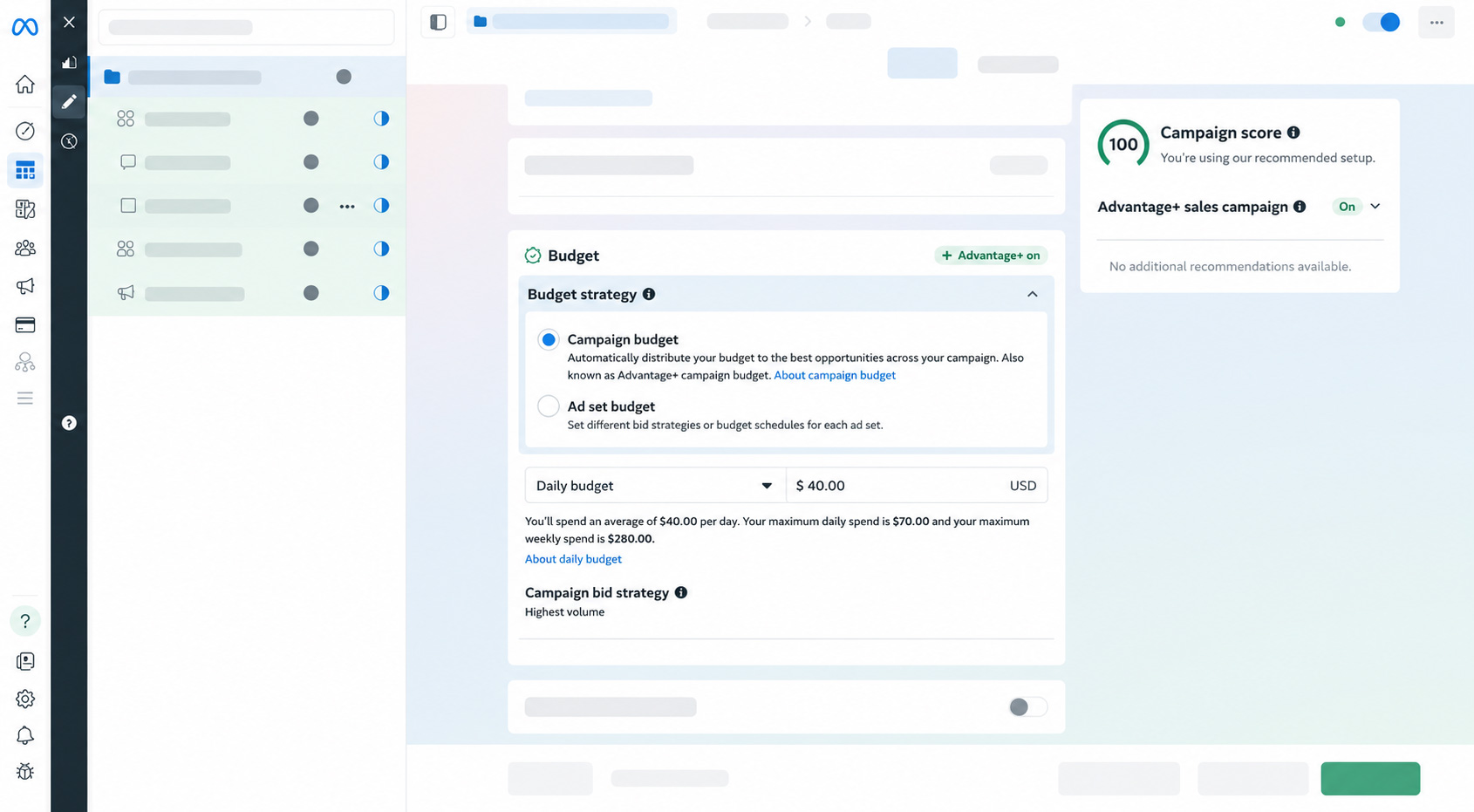
Ad creation
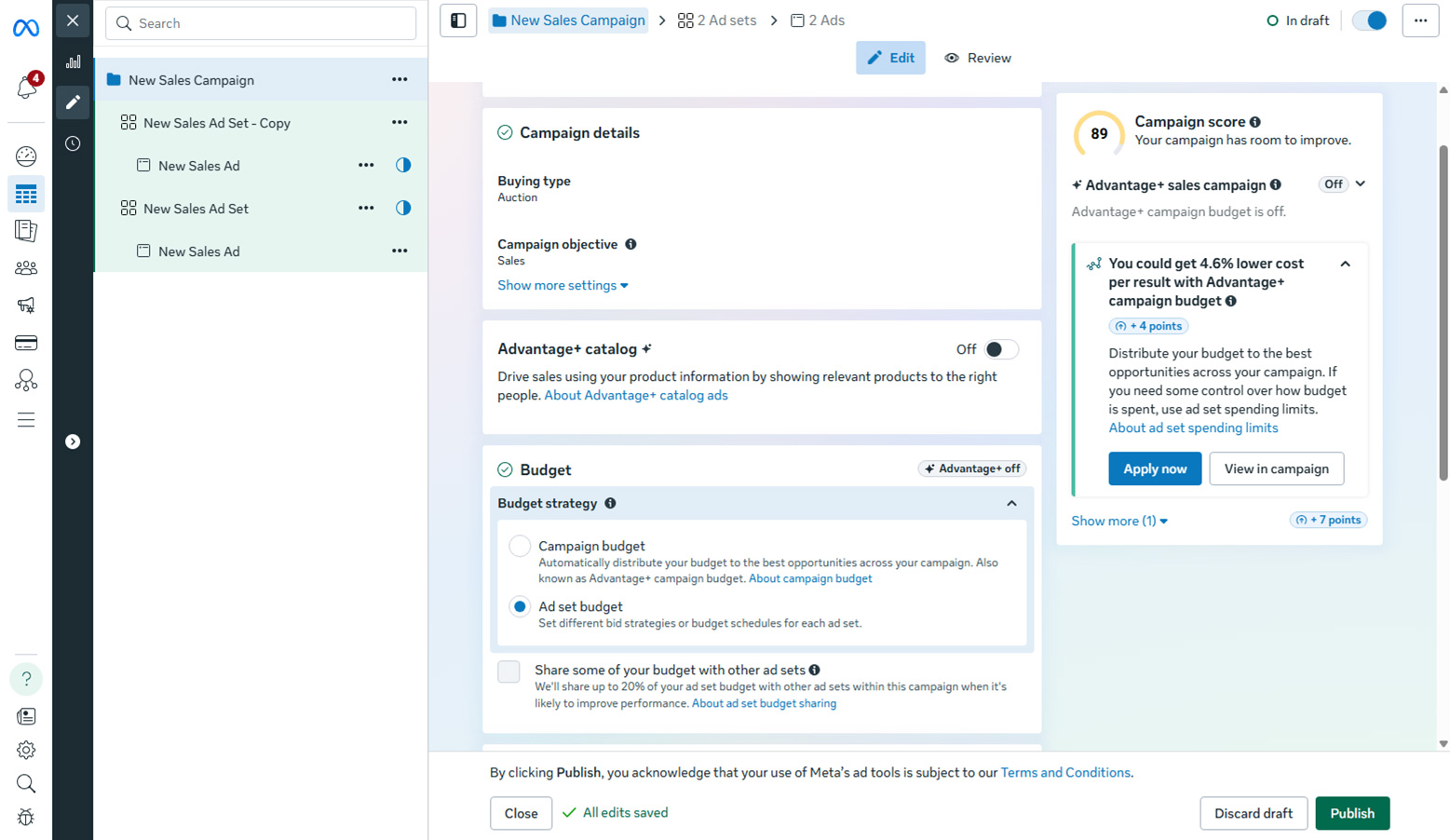
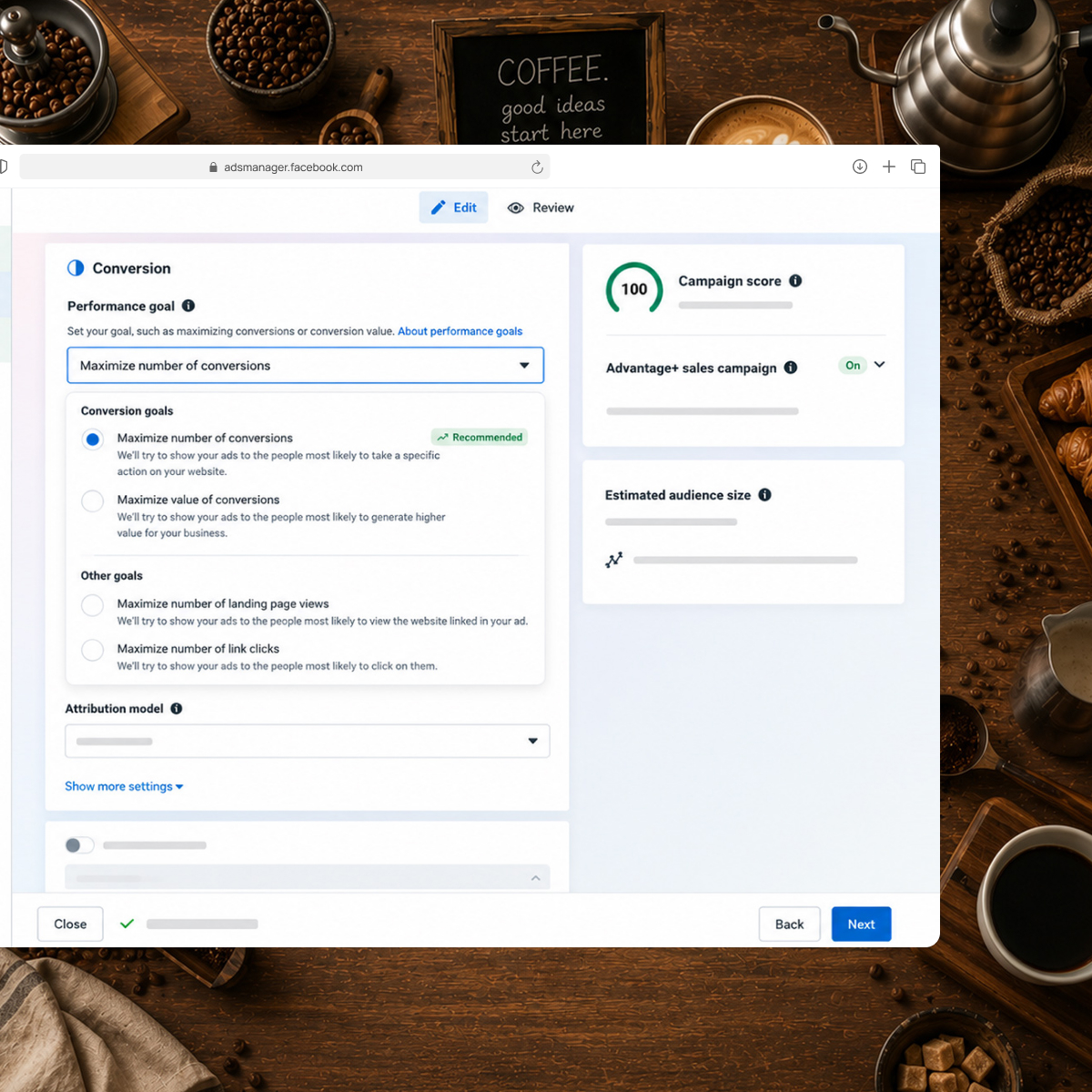
The framework is permanently anchored to the right-hand column of the ad creation flow, acting as a campaign advisor for optimization decisions.
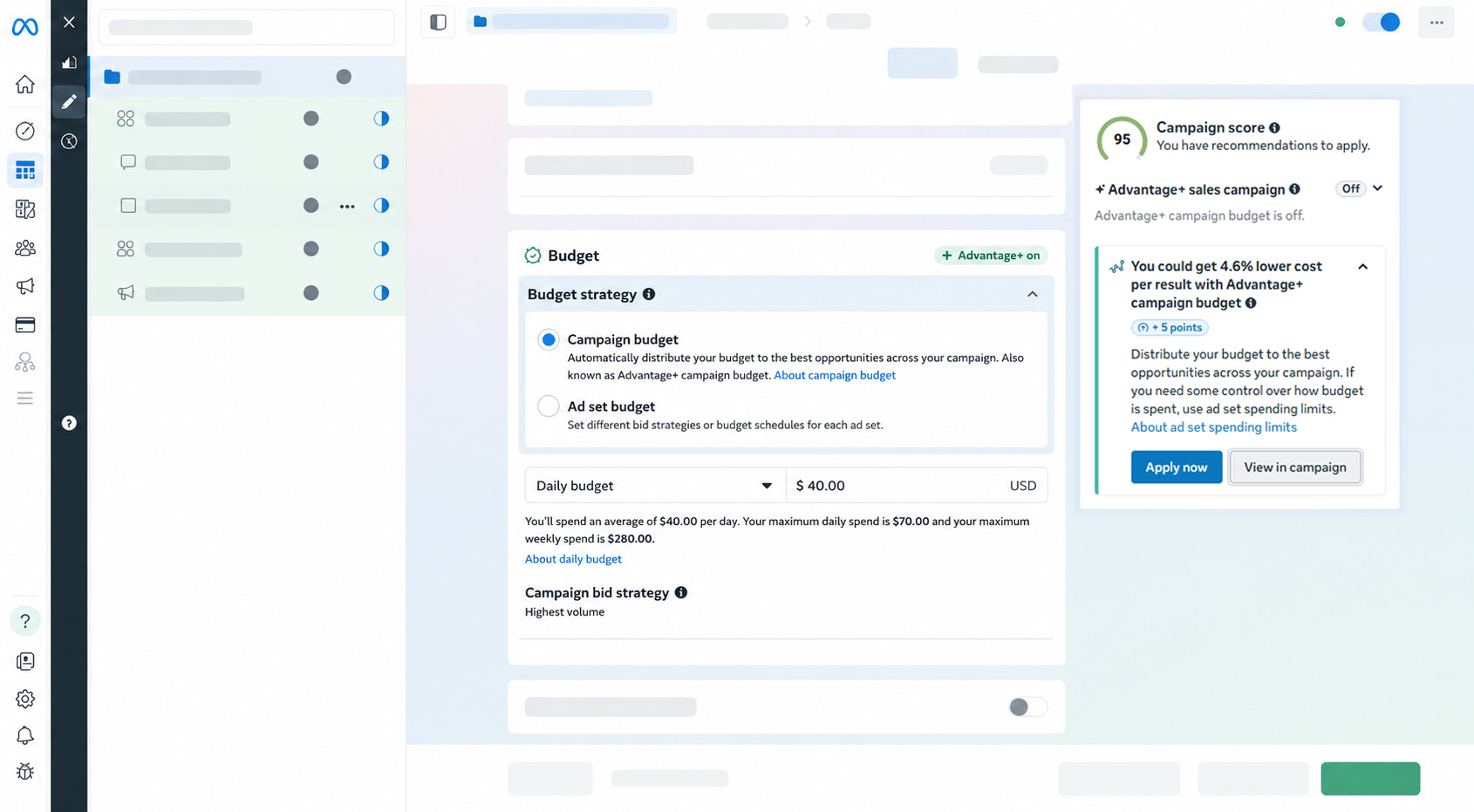
Guiding toward optimality
As campaign setup deviates from proven best practices, the campaign score is reduced, and recommendations are surfaced offering performance optimizations.
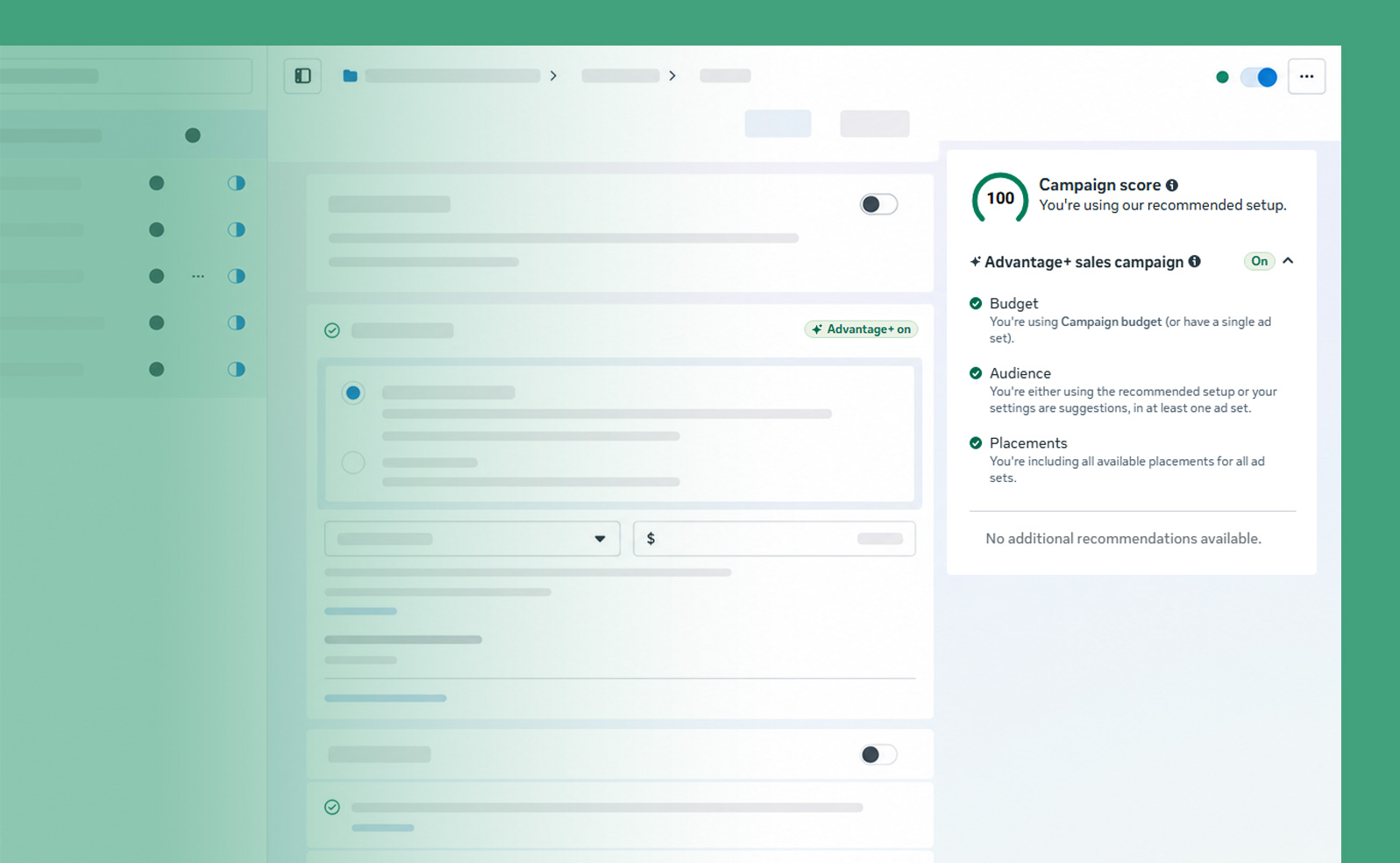
Automation state
While the three primary automation levers (budget, placements, audience) are enabled, the Advantage+ Sales Campaign’s automation state is ‘on’.
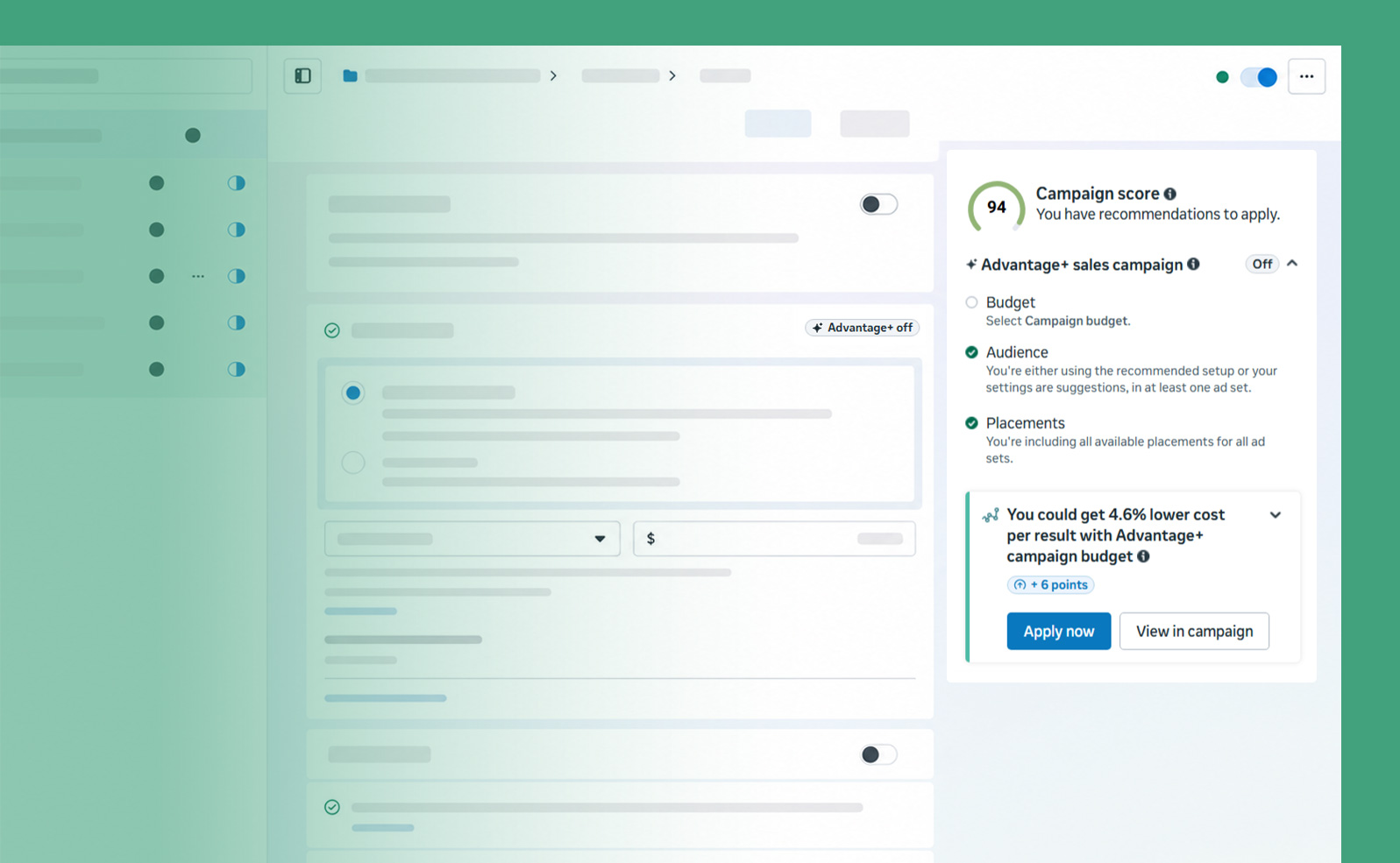
Manual configuration
When automation levers are turned off, opportunities to improve performance with AI are surfaced.
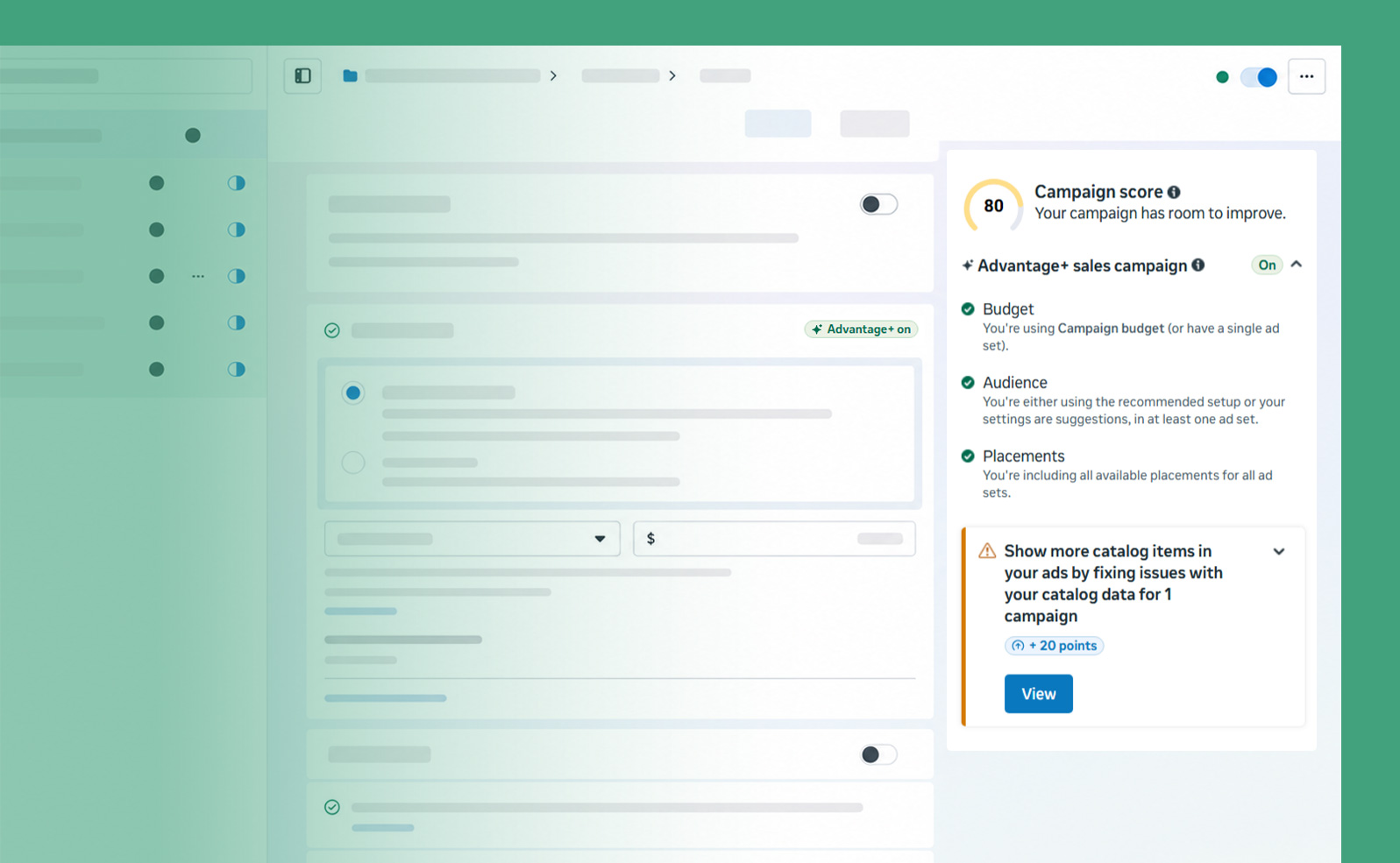
Opportunities
Recommendations unrelated to the primary automation levers are ranked and prioritized.
Outcomes
For advertisers
Meaningfully improved the ad creation experience
Advertisers saw significant performance gains across key metrics like cost per result. By following the personalized guidance the system prioritized, advertisers could always see the biggest performance improvement opportunities before even launching new campaigns.
For the business
Exceeded experiment targets and launched globally
In testing, the merged experience exceeded its targets. It drove meaningful improvements in key metrics across automation (automation liquidity and product adoption) and revenue, as well as improved outcomes for advertisers, outperforming campaigns using only Advantage+ Shopping Campaign or Campaign Score alone.
More work
Goal Expression in Meta’s Ads Manager
Goal Expression in Meta’s Ads Manager

Ad Media Editing Controls
Ad Media Editing Controls

Ad Placement Settings in Meta’s Ads Manager
Ad Placement Settings in Meta’s Ads Manager
Ranking and Prioritization Framework