
"I want to showcase my ads on placements that highlight the quality of my content."
Ad Placement Controls
Role: Product Design Lead
Timeline: ~1 year
Team: Cross-functional product team. Product Design, Content Design, Product Management, Engineering (6), Data Science, Product Marketing. Cross-org family of apps partnership (Facebook, WhatsApp, Instagram, Threads, Messenger, Audience Network).
The evolution of ad placement automation
Meta’s ad delivery system was becoming more automated. As machine learning models improved, giving the delivery system the freedom to decide when and where to show ad placements became one of the most effective ways to maximize campaign performance across Facebook, Instagram, and other platforms. Advertisers, however, still needed transparency and control over where ads appeared across Meta’s inventory of placements.
The project reimagined ad placement controls in Ads Manager by simplifying how advertisers manage their placement strategy across campaign setup. The experience balanced automation with flexibility, helping advertisers understand when automated placements would outperform manual selection, while still supporting customization where needed. The result was a more scalable and intuitive placement system designed for more powerful AI-driven advertising workflows.
Impact snapshot
Advertisers
10M+
Daily impressions
50B+
Platforms
6
Launch scope
Global
Context
Ads Manager is used by over ten million advertisers to publish ads to almost four billion active monthly users across Facebook, Instagram, Threads, and other platforms. Billions of ad impressions are served per day. Advertisers select where these impressions will appear (aka. ad placements), through a selection between:
- Automated placements – the ML decides where to show impressions, when it predicts higher chances of outcomes.
- Manual placements – the advertiser manually selects where impressions can occur.
Advertisers wanted precision and predictability, but Meta’s systems optimized best through automation. The placement selection experience needed to reflect the right mental model that matches how ads actually deliver.
This project explored a fundamental product design challenge: how do you reduce manual complexity while increasing user trust in automation? I led design exploration and UX strategy for placement controls in Ads Manager, helping evolve placements from a static configuration system into a more adaptive experience operating across surfaces.


Why placements matter
Historically, advertisers believed more controls = better performance. But Meta’s machine learning systems increasingly demonstrated the opposite. Broader placement distribution often improved campaign outcomes.
This created a fundamental UX challenge: how do you reduce manual complexity without making advertisers feel like they’ve lost control? The experience needed to maintain advertiser confidence toward allowing automation systems to make the same placement decisions for them.
Ad placements are more than just distribution channels. They directly influence:
Campaign performance
Creative rendering
Audience reach
Interaction model
Problem
High cognitive load
Advertisers were forced to evaluate growing sets of placement options with limited contextual guidance around performance tradeoffs.
Fragmented workflows
Placement strategy was disconnected from creative adaptation, media rendering, and delivery recommendations
Reduced trust in automation
Automatic placements often felt opaque and difficult for advertisers to use confidently.
Creative uncertainty
Advertisers struggled to understand how assets would render across increasingly diverse surfaces and formats.
Scaling complexity
As Meta rapidly expanded inventory across Reels, Stories, Marketplace, and emerging surfaces, the placement system became increasingly difficult to scale coherently.
Opportunity
Improved placement previews
Shifted visibility into how creative would render and adapt across placements into media editing workflows and creative → placement mapping workflows.
Simplified architecture
Reduced decision fatigue through clearer grouping and hierarchy. Separated brand safety controls from placements to better delineate between jobs to be done.
Automation framing
Repositioned automatic placements as performance-oriented optimization rather than loss of control. The system naturally guides advertisers toward the highest allowable automation state.
Scalable foundations
Established design patterns capable of evolving alongside Meta’s rapidly expanding placement ecosystem. These patterns were pressure-tested for the launch of ads on Threads, which I led on the advertiser experience side.
Scale
Billions of ad impressions served every single day.
Over 10 million advertisers on the platform.
Ad delivery across 6 platforms (Facebook, Instagram, etc).
Almost 4 billion active monthly users receiving ads.
Strategy and principles
01
Explainability
Help advertisers understand why broader placement distribution improves outcomes.
02
Adaptive complexity
Expose advanced controls only when it materially impacts a decision in a meaningful way.
03
Scalability
New placements, or even new platforms, should easily fit into the taxonomy. Threads was the test launch for this principle.
04
Progressive automation
Allow advertisers to maintain confidence while gradually shifting toward AI-assisted optimization.
05
Trust through visibility
Increase transparency into how ads appear across surfaces, and enhance specifications for all placements.
06
Liquidity
Automation requires a broad range of placements, instead of constraining delivery to a limited set.
The core advertiser experience
The new placement controls experience is simple, with easy to understand design patterns that now feel native to the platform, rather than a whole new product to learn.
As advertisers diverge from optimal placement configurations, they see recommendations on how to best configure their setup for the best outcomes.
Brand safety controls are decoupled from Placement controls. This gives advertisers the ability to focus on the job to be done: decide where placements should appear.
Account controls allow advertisers to use repeatable “templates” for the placements they typically exclude, setting a rule at the account level to never show ads on a particular placement. This is critical for advertisers with hard business constraints that never advertise on certain placements.
Quick references of how placements appear to users and creative specifications are visible in overlays.
Transformation
Before
After
Advertisers manually micromanaged placements
Advertisers collaborated with optimization systems
Placement selection felt technical
Placement strategy became outcome-oriented
Emphasized configuration
Emphasized confidence in automation
Outcomes
For advertisers
A significantly simpler placement controls experience
- Reduced advertiser decision complexity
Simplified one of the most cognitively demanding parts of campaign setup, where performance is impacted by sub-optimality. -
Increased trust in automation
Helped advertisers transition from manual placement management toward AI-assisted optimization models. -
Improved creative flexibility
Enabled campaigns to adapt more fluidly across a rapidly growing ecosystem of placements and formats.
For the business
Exceeded launch goals with no regressions
Advertisers appreciated the simplification of complex controls, and showed increased usage of it, with statistically significant gains in key metrics.
The experiment met all goals, with no regressions in guardrail metrics like revenue, task completion, or campaign publishing, and rolled out globally in 2026.
The new placement controls experience is live for millions of advertisers today.
More work
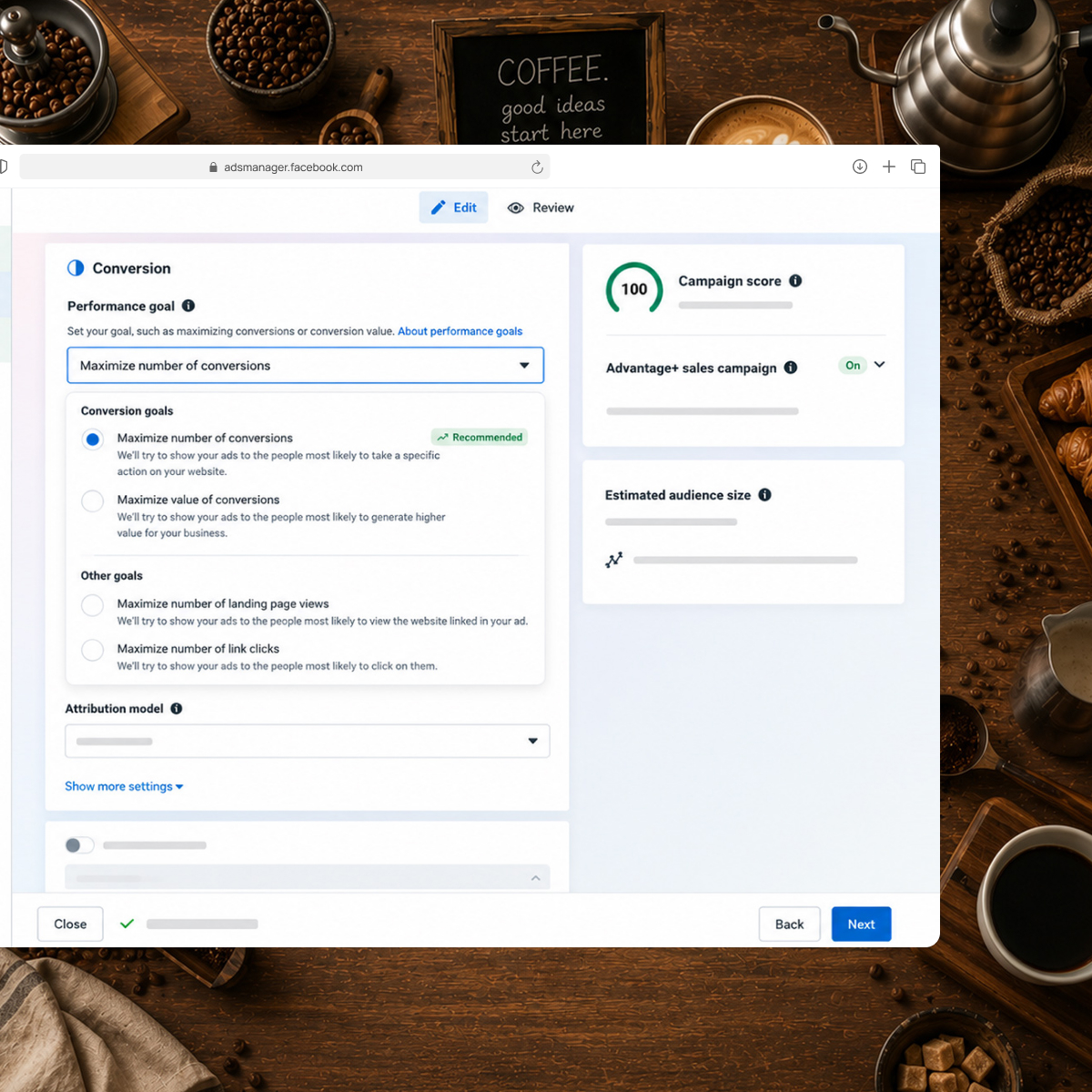
Goal Expression in Meta’s Ads Manager
Goal Expression in Meta’s Ads Manager
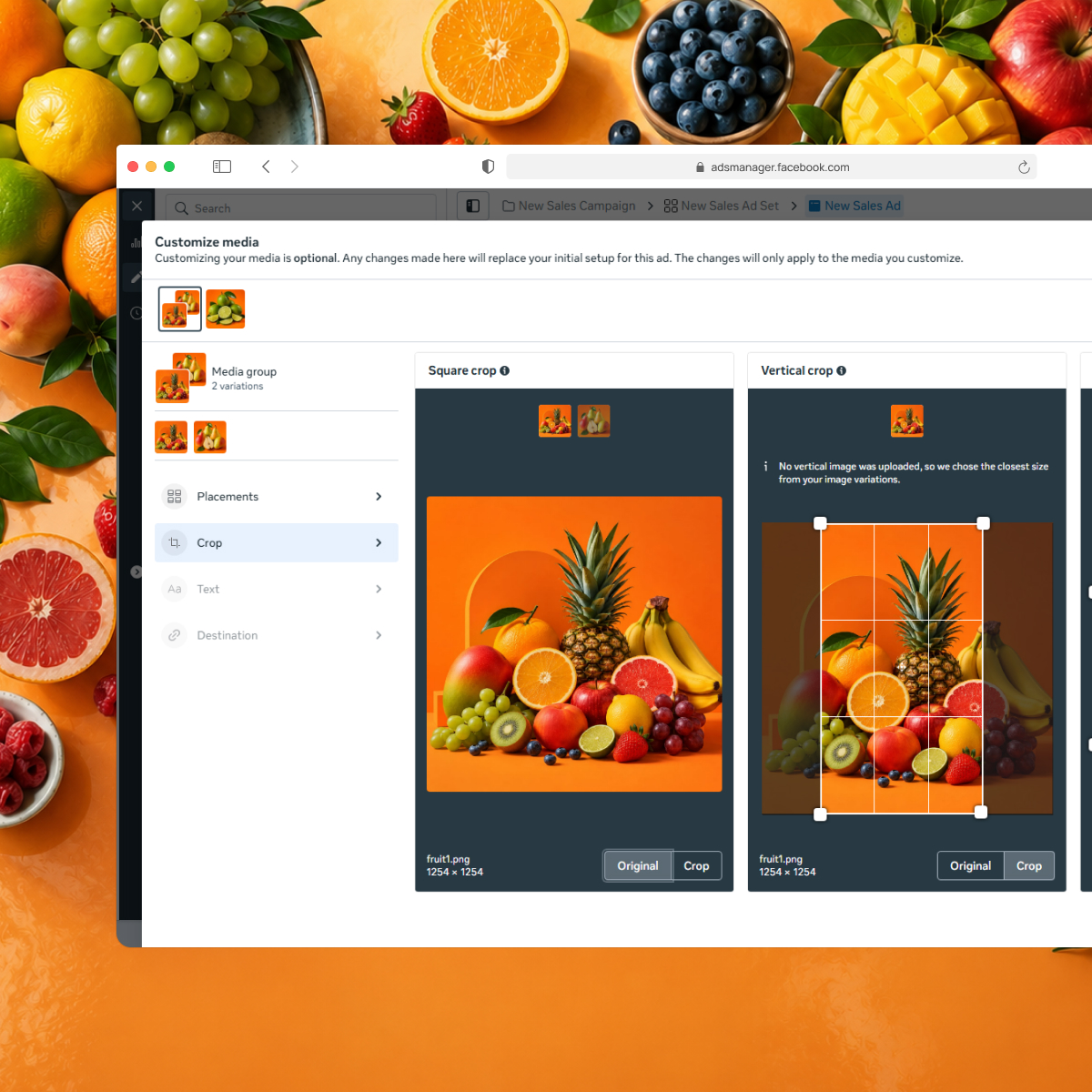
Ad Media Editing Controls
Ad Media Editing Controls

Campaign Scoring for Optimal AI-Powered Ad Performance
Campaign Scoring for Optimal AI-Powered Ad Performance

Ranking and Prioritization Framework